Why IT Support for Healthcare Requires Specialised Knowledge of Clinical Systems and Patient Privacy
Most managed IT providers list healthcare as one of several industries they serve, right alongside…


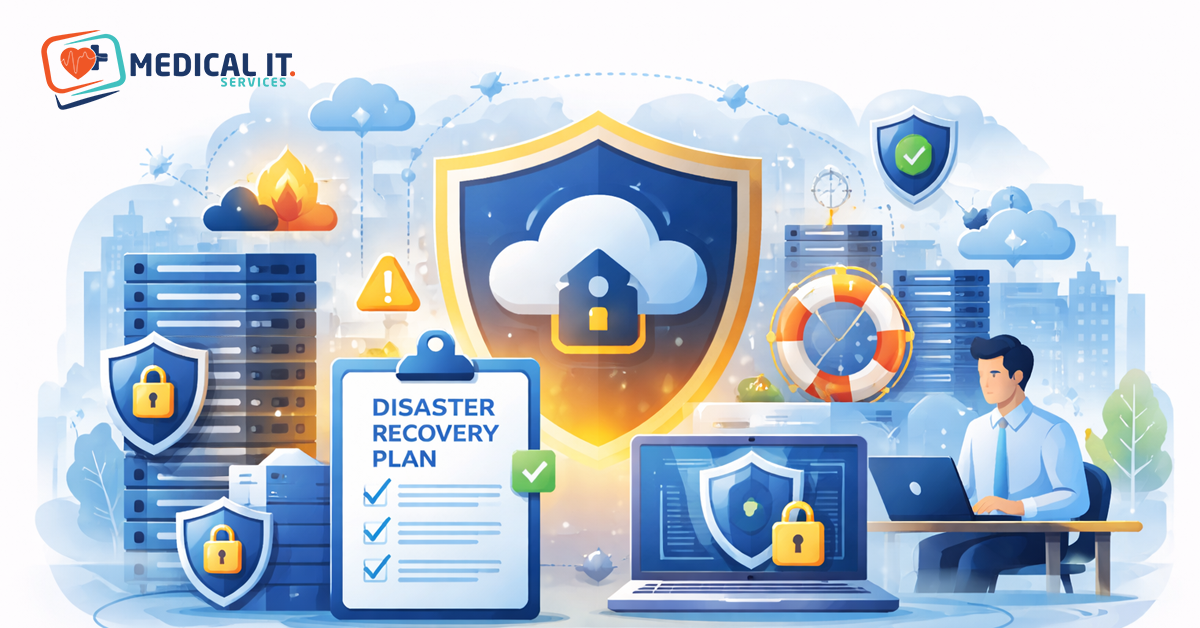
Nowadays, most companies keep their data and applications in the cloud, because it is a convenient and secure way. But sometimes unexpected things can happen, such as natural disasters (earthquakes, rain, or fire), hacker attacks, or technology failures. In such a situation, the company’s important data or services can be shut down, which can affect the business.
That is why a Disaster Recovery Plan (DRP) is very important for every company. This plan keeps the company prepared in emergency situations so that it can quickly recover its data and start running services again. The plan includes backup data, methods for restarting systems, and staff responsibilities. This way, the company can get out of difficult situations without much loss and continue to do business.
A disaster recovery plan is a plan that prepares a company or organization for emergencies. Its goal is to quickly restore data and services after any unexpected problems, such as hacking, natural disasters, or technical failures.
The first step in this plan is to back up data. Backing up means making a safe copy of important information so that it can be restored even if the original data is corrupted.
The plan then includes restarting systems and applications. This means that if a system or application goes down, it can be quickly reactivated.
A disaster recovery plan also clarifies the responsibilities of staff so that everyone knows what to do in an emergency. This way, the company can continue its services and business without much loss.
Storing data in the cloud is convenient and safe, but it is not always 100% secure. Sometimes unexpected problems can occur, such as technical failures, hacking, or problems with the cloud provider’s data center.
If this happens, your important data may be lost, meaning your company’s information, files, or applications may be affected. In addition, the service may be down, which will cause problems for customers and may also affect the company’s reputation.
Most importantly, it can also affect business, as the company will not be able to function immediately. That is why every organization needs to develop its own Disaster Recovery Plan (DRP). This plan helps to take immediate action in an emergency and minimize the damage.
The shared responsibility model in cloud services means that data and security responsibilities do not lie solely with the cloud provider or the user but are shared between the two. In other words, both the cloud provider and the person or company using the cloud have their own responsibilities.
The cloud provider’s responsibilities are usually related to infrastructure. These include protecting the physical hardware so that the server or data center does not fail. And to maintain strong network security so that hackers cannot easily access the data, and ensure the availability of the data center. So that the cloud services are always up and running.
The user’s responsibilities are mostly related to data and applications. The user must encrypt and back up their data to keep it safe, protect user accounts and passwords, and maintain the security of their applications.
This model means that the cloud only protects your infrastructure, but your data, how it is used, and maintaining its security are all the responsibilities of the user. If the user does not fulfill their responsibilities properly, the service can be disrupted, or data can be lost, even if the cloud provider’s security is strong.
There are some important steps you need to take to protect your cloud services and data. First, back up your data regularly. Backing up means making a safe copy of your important files and information so that you can recover them even if the original data is corrupted.
Second, develop a disaster recovery plan and train your staff on it. This plan helps you take quick and accurate actions in case of an emergency. When staff know what to do and when, the damage is minimal.
Third, understand your cloud provider’s security and SLA. An SLA stands for Service Level Agreement, which states what responsibilities the cloud provider has for your services and data.
Finally, develop a contact list and procedure for immediate action in case of an emergency. This can help you get in touch with the right people immediately and resolve the issue quickly.
Cloud services are convenient and beneficial, as you can store your data and applications anywhere. But with this comes some responsibilities. And you should create a disaster recovery plan so that data and services can be restored quickly in any emergency.
In addition, it is important to understand the shared responsibility model, so that you know what the cloud provider protects and what your personal responsibilities are. This way, your data and business are protected in every situation.