Today, businesses are changing at a rapid pace. Every small business wants to connect with…

A Simple Guide to the Best Providers of Internet in Australia
In this fast digital healthcare world, the best providers of internet are no longer then nice-to-have. It is a must-have for running a medical office. Internet Australia clinics, healthcare, and hospitals with anything from electronic health records and telehealth consultations to transferring diagnostic images and using practice management software. During the internet outage, it is difficult to manage work on time, which always causes problems. It can also affect patient care, data at risk, and damage the practice’s bottom line.
Australia’s topography makes it hard to connect to the internet. The country’s large size means that most people live in cities near the coast, while small towns are spread out across huge areas. This geographical reality has affected the development of internet infrastructure, producing a complicated environment of providers, technologies, and service levels that medical offices must negotiate.
This in-depth overview looks at Australia’s primary internet providers from the point of view of healthcare needs. We’ll look at how internet access works in Australia, what medical practices should look for when choosing a provider, average pricing, and useful tips for making the internet operate better in clinical settings. This article gives you the information you need to make smart choices about one of the most important infrastructure expenditures in contemporary healthcare, whether you’re starting a new practice, expanding an existing one, or just looking for improved connectivity.
How Internet Connectivity Works in Australia?
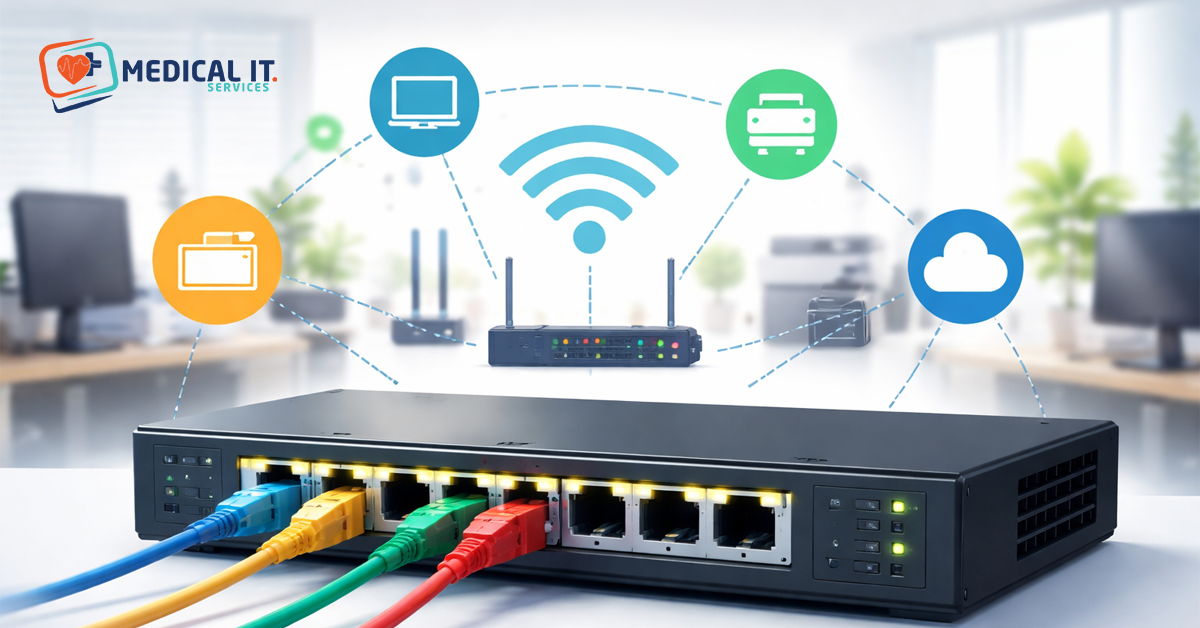
Australia’s internet infrastructure consists of various levels. The NBN serves as the primary provider of last-mile connections for both residential and commercial areas. NBN is a government-owned enterprise responsible for creating and maintaining the physical network infrastructure. That subsequently sells this infrastructure to retailers and service providers (RSPs). They package and sell internet security services to both businesses and consumers, including medical practices.
In addition to the National Broadband Network (NBN), include the following services:
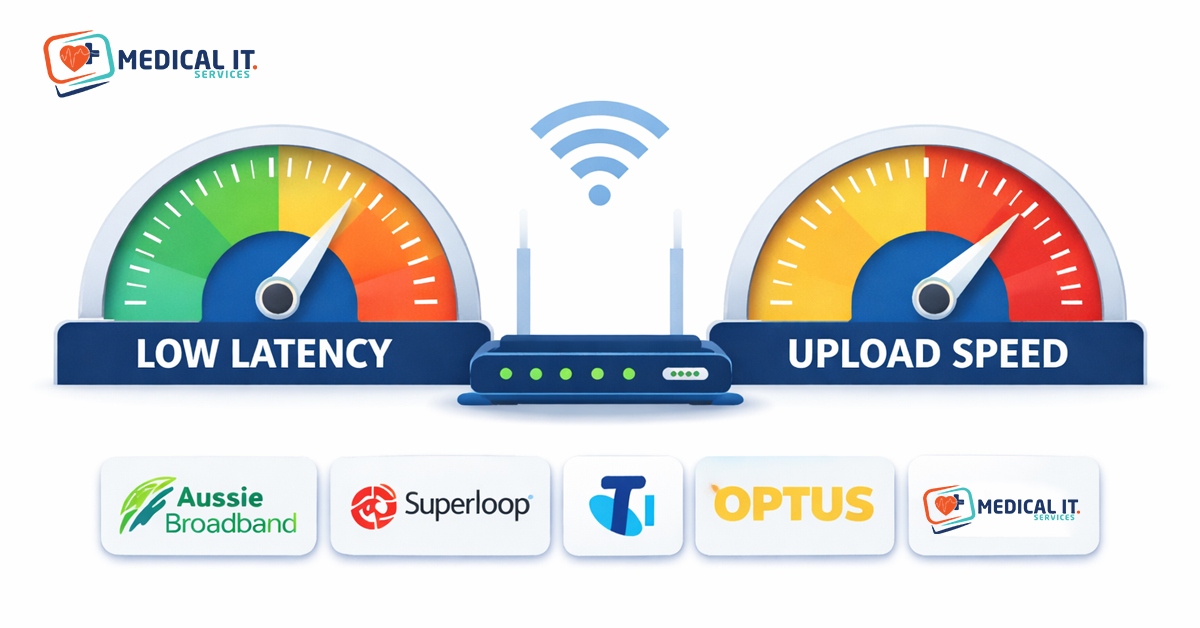
- Mobile networks (4G, 5G) operated by telecommunications companies such as Telstra, Optus, and Vodafone.
- Private fiber networks are found in business districts and select residential areas.
- Satellite services available for remote locations
- Specialist business networks are designed to meet enterprise requirements.
Types of Internet Connections Available
In Australia, healthcare is usually selected from several connection technologies, each with distinct characteristics. Let’s look at NBN Connection Types:
- Fibre to the Premises (FTTP): The platinum standard uses a building-to-fiber optic link. We provide high reliability, low latency, and symmetrical speeds (equal upload and download rates). It is perfect for medical applications that need a lot of data.
- Fibre to the Node (FTTN): The final connection is made using copper lines that are already in place, and the fibre is routed to a neighborhood node. The distance from the node and the quality of the copper cable both have an impact on the rate and dependability. Most of the time, enough for smaller clinics that have mild data requirements.
- Fibre to the Building (FTTB): Comparable to FTTN but dedicated to providing services to business or residential complexes. The fiber’s termination occurs in the communications room of the building, and the connection is completed by the wire that is already there.
- Hybrid Fibre Coaxial (HFC): Utilizes the already established cable pay-TV networks. However, it often has lower upload capabilities, which may influence applications such as telemedicine and data backup apps. It can provide fast download speeds.
- Fixed Wireless: To provide service to remote regions, radio signals are transmitted from transmission towers. Where wired choices are limited, wireless technology may deliver decent speeds, but it is susceptible to interference from the weather and congestion.
- Sky Muster Satellite: Remote and rural areas of Australia are served. Real-time applications are difficult to implement because of higher latency (more than 600 milliseconds); however, better satellites now provide sufficient data limits.
Non-NBN Options:
- Business-grade Fibre: Dedicated fibre connections in which service standards are assured, speeds are symmetrical, and priority assistance is provided. Within urban regions, availability may be obtained from service providers like Telstra, Optus, Vocus, and TPG.
- Enterprise Ethernet: There is no better option than point-to-point dedicated connections for multi-site practices that need dependable and secure access between their many sites.
- 4G/5G Mobile Broadband: cellular networks that enable wireless communication to have been developed. It would be beneficial to employ this service either as a primary service in areas where there are few fixed-line options or as a backup for those processes that are necessary.
- Wireless Broadband: Dedicated spectrum is used for fixed wireless services, which are often provided by local operators in regional regions.
Medical IT Services as Internet Providers: A Specialized Option for Healthcare
While in Australia there are many ISP providers, but medical IT services company offers a unique alternative service for healthcare practices. We always try to provide the best services of internet services in Australia for medical practices. We understand that reliable internet services are the foundation of modern healthcare technology. And we often add internet services to:
- Ensure Seamless Integration – Telehealth, cloud, and practice management tools function without connection difficulties.
- Provide Single-Point Responsibility – Our company handles both your IT systems AND the internet that powers them.
- Optimize for Medical Applications – We setup the internet for healthcare software.
We offer internet services designed specifically for the healthcare industry, providing a tailored solution rather than just a basic connection. While enhanced integration with clinical systems is beneficial, it doesn’t necessarily mean we are better than traditional providers. Many practices find peace of mind, simplified administration, and improved performance in patient care when they partner with a provider who understands both the internet infrastructure and the medical applications that operate on it.
By considering the internet not as a separate utility but rather as an inherent component of the practice’s clinical technology ecosystem, this mode of operation exemplifies the convergence of connectivity and healthcare technology.
Conclusion
A weak decision to select the internet NBN provider for Australian medical practices impacts everything from operations to patient care. In a world where downtime interrupts consultations, delays diagnoses, and compromises data security. Medical practices must prioritize reliability, speed, and healthcare-specific support over cost. Our specialized NBN corporate fiber and medical IT services are the best choice for our customers 24/7. The selection of a package depends on the practice’s size, location, tech needs, and compatibility with clinical software and security requirements.
Ultimately, a professional practice internet connection is more than just a utility. It is the backbone of modern and professional healthcare delivery systems. Whether are not selection for a major national or a professional medical IT solution, spending money on a strong, safe, and expandable link is an investment in the trust of your patient and stability of operations and care that is ready for the future. It can build a digital foundation that not only supports today’s demands. But also adapts to tomorrow’s innovations in Australian Healthcare.
Related Posts