Nowadays, most businesses have gone digital, meaning that most of the work is done on…

Are Cloud Phone Systems Reliable? Uptime, Redundancy, and Disaster Recovery Facts
In today’s modern digital age, many companies are using cloud phone systems. These phone systems work over the internet, so they can be used from anywhere. These systems are more modern, cheaper, and easier to use than traditional landline phones. But one question that often comes to mind is, are cloud phone systems reliable?
To answer this question, we need to understand three important things: Uptime, Redundancy, and Disaster Recovery. Let’s understand the answer in three main aspects.
What is Uptime, and why is it important?
Uptime refers to how long a phone system is continuously up and running without interruption. In simple terms, if the phone system is up most of the time and calls are going without interruption, then its Uptime is considered good.
Uptime is very important in cloud phone systems because these systems work entirely on the internet. If the system is down repeatedly, not only are users affected, but also the business can be harmed.
Most quality and reliable cloud phone providers guarantee 99.9 percent or more Uptime. This means that the service can only be down for a few minutes or a few hours in a whole year, which is a very short time.
The biggest advantage of good Uptime is that calls never get disconnected. Whenever customers call, they get a line available. This increases customer confidence and improves the company’s reputation.
Another big advantage is that the business is not affected. Sales, support, and other important calls continue uninterrupted. If the phone system goes down, the business can suffer financial losses, so good uptime is essential.
The third advantage is that customers can easily contact you. In today’s era, people want an immediate response. If they don’t get a call, they contact another company. Good uptime prevents this problem.
In traditional landline phone systems, service is often interrupted due to power or line failure. In comparison, cloud phone systems have much better uptime because they work on modern servers and backup systems.
That is why it can be said that good uptime is the biggest strength of cloud phone systems and is very important for every business.
What is Redundancy?
Redundancy means that the system has a backup, so that if, for some reason, one part fails, the other starts working immediately. In simple words, redundancy is a safety system that prevents the phone system from shutting down.
Redundancy plays a very important role in cloud phone systems. These systems do not rely on just one server, but use multiple servers. These servers are often located in different locations and different data centers.
If, for some reason, one server fails, such as a technical problem, power outage, or internet problem, the system automatically switches to another server. This entire process takes a few seconds, and often the user does not even know that there is a problem.
The biggest advantage of redundancy is that the system does not shut down. The phone line continues to work, and business communication is not affected. This saves the company both time and money.
Another important advantage is that calls are automatically transferred to another server. Neither the call is dropped nor does the customer need to call back. This is especially important for customer support and sales.
The third advantage is that the user does not notice the problem. The caller feels that the system is working perfectly, which maintains the professional reputation of the company.
Traditional phone systems usually do not have redundancy. If the line is damaged or the system is down, all calls are stopped, and you must wait until the problem is resolved. In comparison, the redundancy of cloud phone systems makes them more secure, reliable, and modern. That is why most businesses prefer cloud phone systems today.
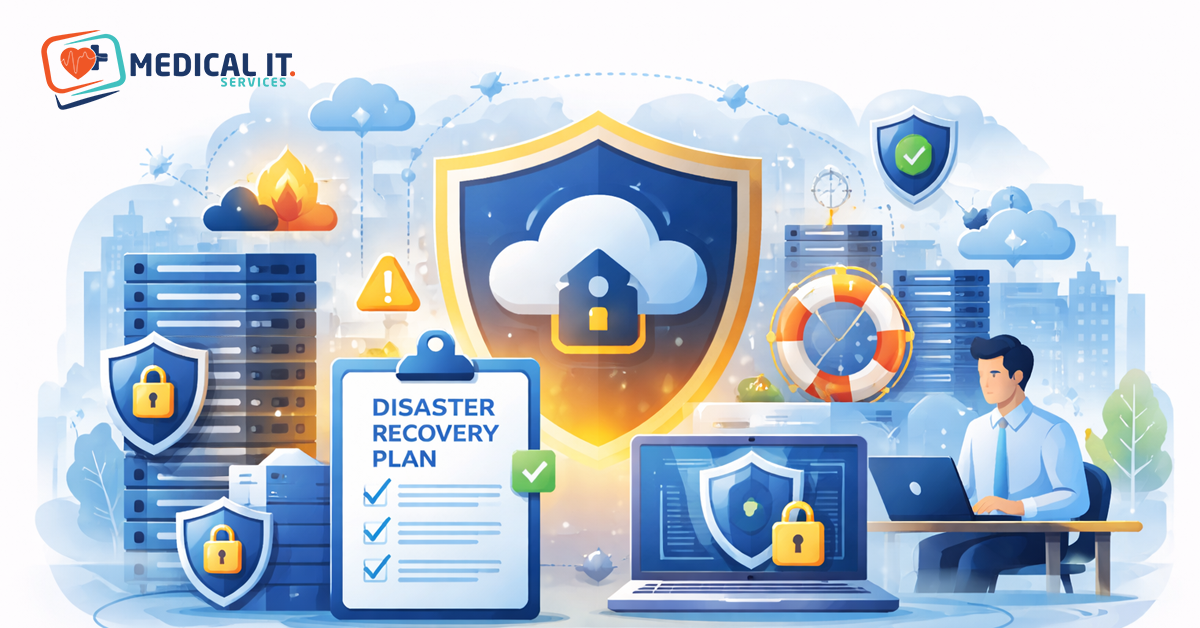
What is Disaster Recovery?
Disaster Recovery means that if a phone system is affected by a major problem or emergency, it should be operational again as soon as possible. These problems can be both natural and technical, such as a long power outage, flood, earthquake, internet, or server failure.
In traditional phone systems, if such a problem occurs, the entire system shuts down and business communication stops completely. But cloud phone systems have advanced disaster recovery arrangements.
The most important thing in cloud phone systems is that data is automatically backed up. This means that call records, voicemail, and settings are safe and can be retrieved at any time.
If a problem occurs at one location or office, calls can be transferred to another location or a mobile phone. In this way, there is no difficulty in contacting the customer, and calls are not lost.
Another big advantage is that work can be continued from home or any other place. Employees can attend calls via laptop or mobile, even if the office is closed.
The biggest advantage of Disaster Recovery is that the business does not completely shut down. Even in emergencies, the company remains in touch with its customers, which maintains trust and reduces losses.
Conclusion
Cloud phone systems are reliable, especially if you use the service of a good and reputable company. Their biggest advantages are that due to high uptime, calls never stop, and the business continues to run without interruption.
Due to redundancy, calls are transferred to another server even if there is a system failure, and the user does not feel any problem. Through Disaster Recovery, work continues even in emergencies, and data remains safe.
These systems have become the first choice of every small and large business today due to their low cost, ease, and modern nature.
Related Posts