What is IT Network Management? Nowadays, almost every business runs on the Internet and computer…
Understanding the Role of Hardware IT in Business
The concept of business in the modern era is incomplete without technology. Information Technology (IT) has not only changed the way businesses operate but has also significantly improved efficiency, speed, and quality of the organization. IT has two basic components: software and hardware. While software consists of digital instructions and programs, hardware is the physical devices required to run any IT system.
This article will shed detailed light on the role, importance, benefits, types, and future of hardware IT in business.
What is hardware IT?
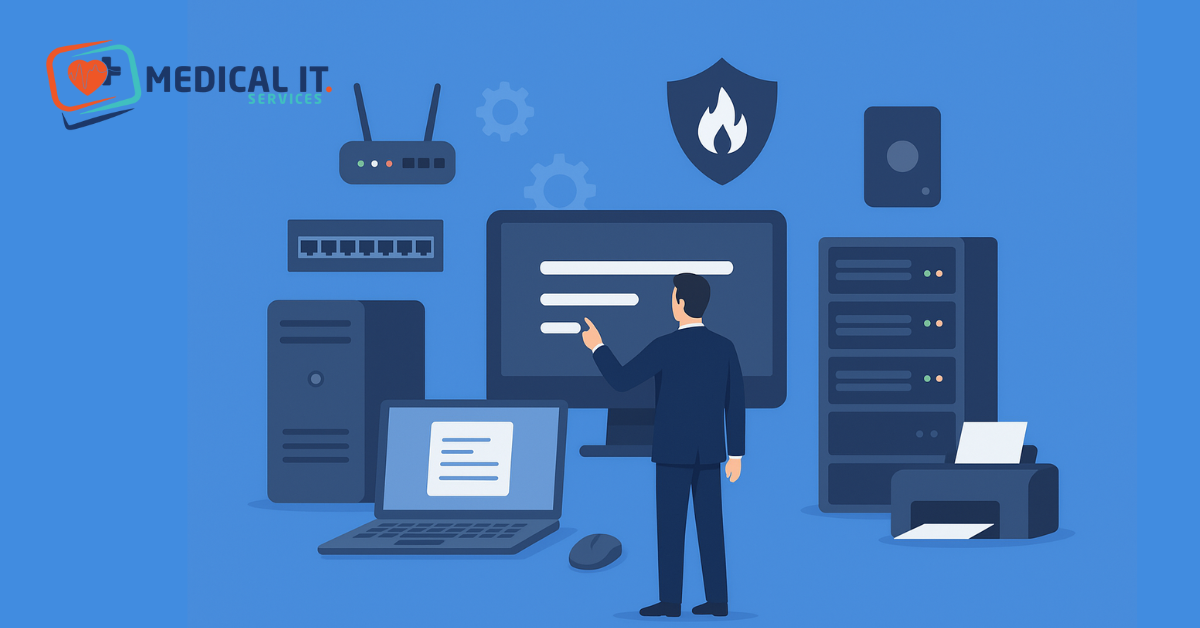
Hardware IT refers to physical devices and machines used to run an information technology system. These include computers, laptops, servers, printers, routers, switches, and data storage devices. All these devices can be seen and touched, which is why they are called hardware. Without hardware, it is not possible to operate any software or digital system.
Hardware IT is the foundation of any organization’s IT infrastructure. This hardware stores data that helps run networks and maintains communication between different systems. Modern hardware makes business faster, more efficient, and more reliable, making everyday tasks easier.
Importance of Hardware IT in Business
The importance of hardware IT in business is high because all business activities depend on these devices. Employees create records, store data, and communicate with customers through computers. If the hardware is weak or old, the speed of work is affected, and the risk of business loss increases.
In addition, strong and modern hardware increases the efficiency and productivity of the business. It makes it possible to keep data safe, improve security, and ensure fast communication. That is why successful businesses always invest in quality hardware so that they can stay ahead in the competitive era.
Types of Hardware IT and their business use
1)- Computers and workstations
Computers are a necessity for any business. They are used by employees to perform daily tasks such as data entry, emails, and reports. It is impossible to imagine a modern business system without computers. They make work organized and faster.
Workstations are more powerful than ordinary computers. They are especially used in fields such as graphic design, video editing, and engineering. They have more memory and faster processors. This makes even difficult tasks easier to complete.
Modern computers and workstations improve business efficiency. They save employees time and reduce the chances of errors. Faster systems keep businesses ahead of the competition. That is why organizations prefer better hardware.
2)- Servers
Servers are the central systems of a business. They store data, files, and applications. All employees access the same information through the server. This creates harmony in work.
Servers play a very important role in large businesses. They run websites, email systems, and business software. Without servers, it becomes difficult to work on a network. That is why they are also called the heart of a business.
Servers also play an important role in data security. They provide backup and data recovery facilities. If the system crashes, the data remains safe. This is why organizations use robust servers.
3)- Network hardware
Network hardware includes routers, switches, and firewalls. All these devices work to connect computers. Data is transferred from one place to another through the network. This speeds up the work.
The router provides an internet connection, while the switch connects different systems. The firewall protects the network from illegal access. All these devices together form a secure network. A secure network is very important for business.
Good network hardware improves communication. Employees can easily share information. Online meetings and digital work are possible. In this way, the business runs according to modern requirements.
4)- Storage devices
Storage devices are used to store data. These include hard drives, SSDs, and network storage. Business records and files are stored in them. Data security is very important.
Modern storage devices store more data in less space. They are fast and help in opening data quickly. SSD is more efficient than old hard drives. This speeds up business work.
Storage devices are also used for backup. If the system crashes, the data is not lost. Data recovery protects the business from loss. That is why storage hardware is very important.
5)- Output devices
Output devices are devices that display information. They include printers, scanners, and projectors. And they help with producing business reports and documents. They play an important role in office work.
Printers are used to bring documents to paper. Scanners convert files into digital forms. Projectors are used in meetings and presentations. All of these make business communication easier.
Output devices create a professional identity for business. Clear and crisp prints improve business quality. A good presentation makes a positive impression on the customer. That is why these devices are essential for businesses.
Hardware, IT, and business production
Hardware IT directly impacts the overall productivity and performance of any business. With the use of modern and quality hardware, business tasks are performed more quickly and accurately. Computers, servers, and other IT equipment streamline business activities, allowing employees to work better. When hardware is modern, work interruptions are reduced and time is saved.
Modern hardware significantly increases employee performance. Fast computers and modern workstations help employees complete complex tasks with ease. When systems are slow or outdated, employees lose valuable time, which also increases mental stress. Conversely, good hardware improves the quality of work and enables employees to work more efficiently.
Hardware IT also plays a significant role in reducing delays at work. Robust servers and network hardware provide instant access to data, allowing decisions to be made quickly. The chances of system downtime or data loss are reduced. In this way, business processes continue without any interruption, which leads to increased productivity.
In addition, modern hardware also reduces the chances of errors. Thanks to automated systems and better data storage, human errors are reduced. Accurate data and timely information help in making better decisions. As a result, the business not only earns more profits but also gains the trust of customers. Thus, hardware IT proves to be an important tool for business success.
Conclusion
In conclusion, it can be said that hardware IT is the foundation of modern business, and without it, business growth is not possible. Computers, servers, networks, and other hardware devices make business systems organized, fast, and efficient. They not only make daily tasks easier but also keep organizations in line with the requirements of modern technology. Strong hardware IT provides a solid foundation for business.
Hardware IT plays a significant role in improving employee performance. When systems are modern and reliable, employees get more and better work done in less time. This reduces work delays and reduces the chances of errors. As a result, business productivity increases and the organization can achieve its goals more effectively.
Moreover, hardware IT ensures the protection and security of data. Secure data maintains the reputation and trust of the business. Organizations that invest correctly in hardware can compete in the market. Therefore, it can be said that hardware plays a key role in the success, growth, and profitability of an IT business.
Related Posts